
What's in a Mortgage? Breaking Down Your Monthly Payment
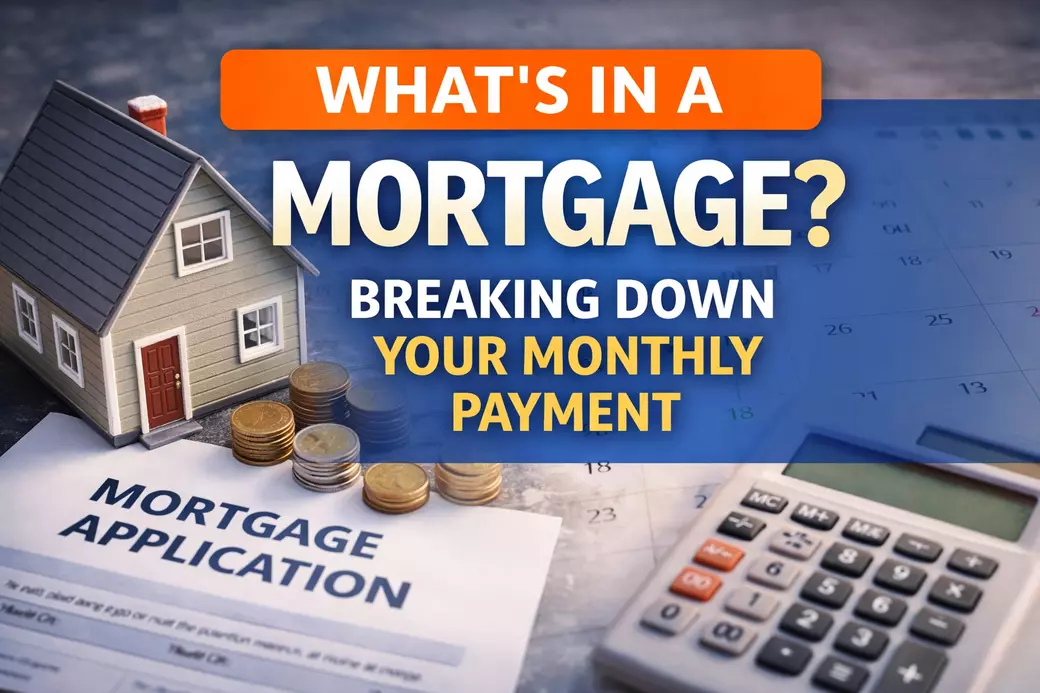
What’s in a Mortgage? Breaking Down Your Monthly Payment
In simple terms, a mortgage is a long-term loan that helps buyers purchase a home without needing to pay the full price upfront. For many, it’s the path to homeownership—and a key part of achieving the American Dream.
Once you own a home, your mortgage will likely be one of the largest financial commitments you ever make. That’s why it’s important to understand how your mortgage payment works, what makes it up, and where your money actually goes each month.
When Does My Mortgage Payment Start?
This is a common question—especially for first-time buyers.
Mortgage payments typically begin one full month after the month you close. Unlike rent, which is paid in advance, mortgage payments are paid in arrears (meaning you’re paying for the previous month).
Example:
If you close on your home on March 28, your first full mortgage payment (for April) is due on May 1.
What Determines Your Monthly Mortgage Payment?
Two primary factors influence your monthly mortgage payment:
- Loan amount – The total amount you borrow.
- Loan term – How long you have to repay the loan (commonly 15 or 30 years).
Longer loan terms typically result in lower monthly payments, which is why the 30-year mortgage remains one of the most popular options among home buyers.
Remember PITI: The 4 Main Parts of a Mortgage Payment
Most monthly mortgage payments are made up of four components, commonly referred to as PITI:
- Principal
- Interest
- Taxes
- Insurance
Principal
The principal is the actual amount of money you borrowed from the lender—excluding interest. It’s your original loan balance on day one.
Each mortgage payment includes a portion that goes toward reducing this balance. With a fixed-rate loan, your total payment stays the same, but how it’s split changes over time.
In the early years, a larger portion of your payment goes toward interest. As time goes on, more of your payment is applied to the principal.
Starting Principal Formula:
Purchase Price + Fees Rolled In − Down Payment
Interest
Interest is the cost of borrowing money—it’s how lenders earn a return for providing the loan.
Mortgage loans are structured so that lenders collect more interest in the early years of the loan. Over time, as the balance decreases, less of your payment goes to interest and more goes to principal.
Important to know:
Higher interest rates = higher monthly payments.
Interest is calculated annually and applied monthly, whether you have a fixed-rate or adjustable-rate mortgage.
Side Note: What Is Amortization?
Amortization is the schedule that shows how each monthly payment is split between principal and interest over the life of the loan.
Most lenders provide an amortization schedule, and there are also free online calculators that can help you estimate how your payments will change over time.
Property Taxes
Most lenders require property taxes to be included (or escrowed) in your monthly mortgage payment.
Property taxes:
- Are assessed by local government agencies
- Fund schools, roads, police, fire services, and other public needs
- Can change from year to year based on property value and local tax rates
Your lender collects a portion of your annual tax bill each month and pays the taxes on your behalf when they’re due.
Insurance
Insurance is also commonly escrowed as part of your mortgage payment to ensure continuous coverage.
This typically includes homeowner’s insurance and, in some cases, mortgage insurance. While these costs are usually stable, they can change due to factors like claims history, neighborhood risk, or market conditions.
Common Types of Mortgage Insurance
Private Mortgage Insurance (PMI)
PMI is usually required when a buyer puts down less than 20% on a conventional loan.
- Protects the lender—not the borrower
- Cost varies based on credit score and down payment
- Typically removed once sufficient equity is reached
PMI can often be paid monthly, annually, or upfront depending on the loan structure.
Homeowner’s Insurance
This insurance protects your home and belongings and provides liability coverage for accidents on the property.
It’s important for homeowners to understand their coverage and monthly cost, especially if premiums change over time.
Mortgage Insurance Premium (MIP) for FHA Loans
FHA loans require mortgage insurance regardless of down payment size.
- Includes both an upfront and annual premium
- Protects the lender in case of default
- Costs and duration depend on loan terms and down payment
Borrowers can review current MIP rates directly through FHA resources.
Final Thoughts
Understanding what goes into your mortgage payment helps you make confident, informed decisions as a homeowner.
At the end of the day, your mortgage isn’t just one number—it’s a combination of moving parts that change over time. Knowing how principal, interest, taxes, and insurance work together puts you in a much stronger position, whether you’re buying your first home or planning for the long term.
Categories
- All Blogs 71
- Appraisal 1
- Buyer's Specialist 6
- Buying a Home 26
- Featured Area 1
- Foreclosures and Short Sales 1
- Home Buyer 31
- Home Seller 32
- Homeowner Association 3
- Listing Specialist 9
- Local Events 2
- Market Update 17
- Mortgage Rates 5
- Real Estate Advice 34
- Recession 1
- Selling a Home 24
- Twin Cities Minnesota 49
- Twin Cities Real Estate 40
- Veteran 1
- When to Buy 14
- When to Sell 12
Recent Posts









LEAVE A REPLY

Realtor & Team Leader License ID: 20359558
+1(651) 269-3487 | sandy@sandyerickson.com